
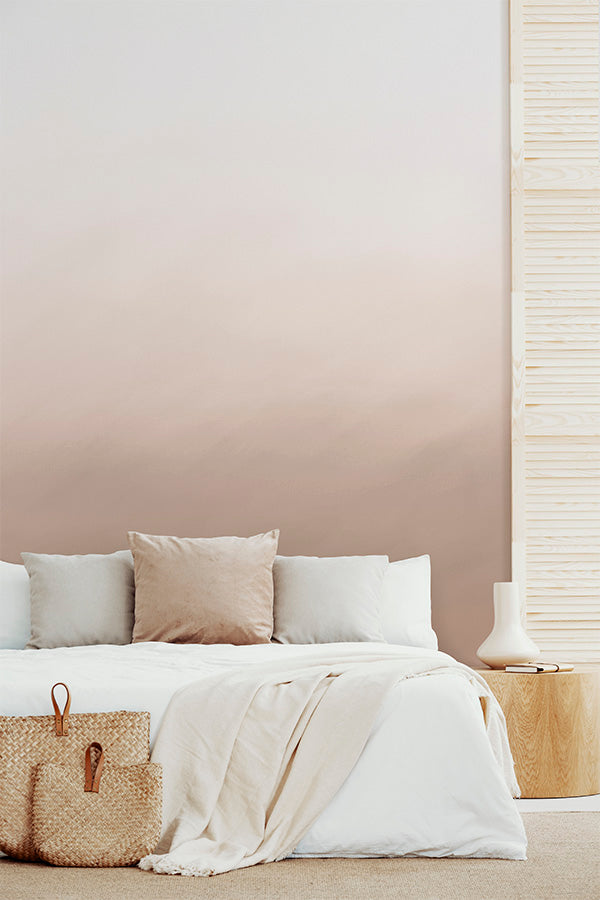
Collecting the keys to a BTO flat is an exciting milestone, and for most people it is the first home that is genuinely theirs to shape. Nothing in it has been chosen by anyone else. Every bedroom is a blank wall, a window and a floor, waiting for you to decide what it becomes, and you get to make those decisions in the order you want rather than inheriting someone else's.
This guide is about the bedrooms specifically, all of them rather than just the one you sleep in. We'll cover what you get at handover, why the walls are worth doing before the furniture arrives, how to think about the main bedroom and the children's room differently, the wallpaper styles that suit rooms whose use will change, and the practical decisions that are much easier to make now than in two years' time.
What You Get At Handover
BTO flats are handed over with the bedrooms finished to a plain standard: painted walls, floor finish, a window, and in most cases nothing else. There are no wardrobes, no shelving and no lighting beyond the provision points. How many bedrooms you have depends on the flat type, with a 3-room giving you two and a 4-room or 5-room giving you three.
That blankness is the opportunity. The walls are flat, clean and completely accessible, which is the best condition a wall will ever be in. There is no furniture to shift, no skirting to work around that you have not chosen yourself, and nobody's bedtime to work around either.
Why The Walls Come Before The Furniture
Wallpapering a bedroom in an empty flat and wallpapering the same bedroom two years later are two different jobs. In the empty flat you have the whole room to work in, the paper can be hung wall to wall without cutting around a wardrobe, and nothing has to be covered or protected.
Once the built-ins go in, the picture changes. A full-height wardrobe run is fixed to the wall and papering behind it is neither possible nor worth it, so the wall you are left with is whatever the carpentry did not take. Hanging paper around fitted furniture also means more cuts, and every cut is somewhere the job can look less neat than it should.
The practical order is: decide the built-ins, hang the paper on the walls that will stay visible, then install. Wallpaper is a surface finish rather than renovation work, so it does not involve the permit questions that hacking or structural changes do, and it slots neatly between the carpenter's measurement visit and the installation date.
Planning The Bedrooms In A BTO Flat
The bedrooms in a new flat are not interchangeable, and treating them as one decision is how people end up with rooms that all look like the same room. Two of them are worth thinking about separately.
The Main Bedroom
The largest bedroom, usually with the attached bathroom in a 4-room or 5-room flat, and the one with the most constraints on where furniture can go. Bed size, the wardrobe run and the en-suite door all pull against each other in a way they do not in the other rooms, so it deserves its own treatment rather than a paragraph here. We have written it up separately in our guide to HDB master bedroom design.
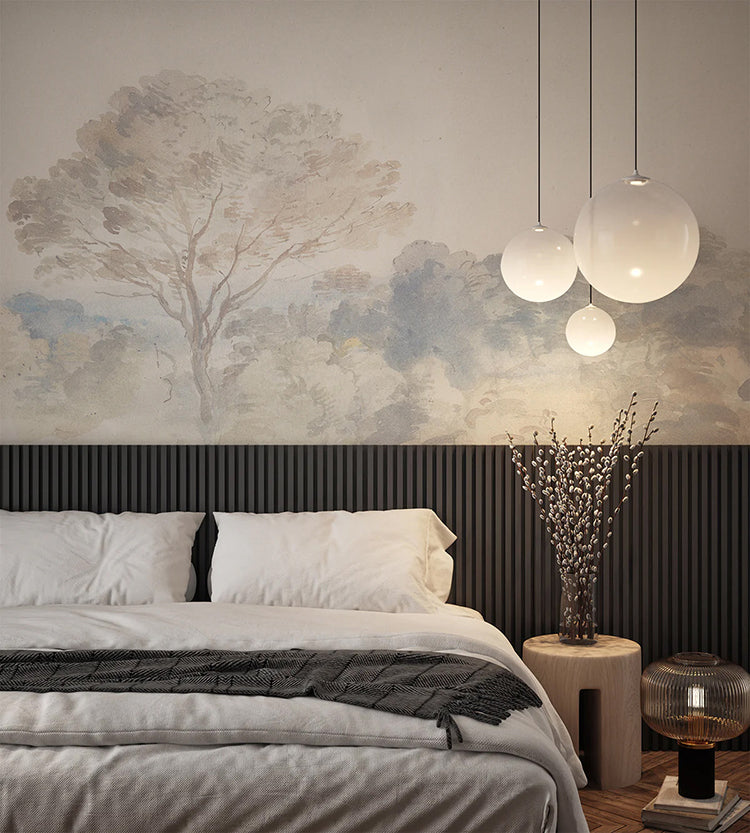
Featured: An Old World Arboretum, Watercolour Mural Wallpaper
The Children's Room Or Nursery
This is the room that changes fastest. It may be a nursery before it is a bedroom, a bedroom before it is a study, and in a good number of flats it spends its first year or two as a guest room or a store while you wait. Designing it for exactly one of those stages is the thing most worth avoiding.
What works is a scheme that grows up gracefully. A soft gradient, a gentle check or a playful pattern that is not tied to a character or an age will carry a cot now and a desk later, where a themed mural has a shelf life measured in a couple of birthdays. Think about the wall behind the cot or bed as the one that does the work, and keep the rest plain so you can change the room with bedding and shelving rather than with a fresh roll of paper.
It is also usually the room with the least natural light, so a pale ground does more work here than in the main bedroom. Our HDB children's bedroom guide goes further into the designs themselves.
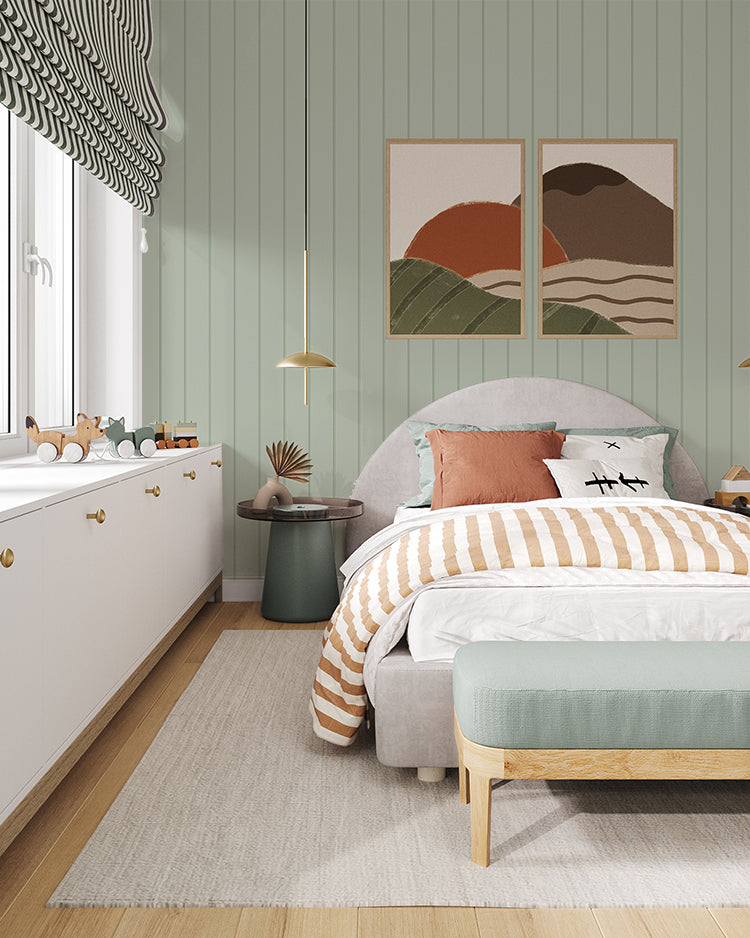
Featured: Shiplap, Vertical Wallpaper
Wallpaper Styles For A BTO Bedroom
The designs below are chosen for rooms that are not yet settled, which means they have to work before you know exactly what each room will be used for.
Vertical Panelling And Stripes
Vertical lines are the most useful thing you can put on a bedroom wall in a new flat. They carry the eye upward, which makes a standard ceiling read as higher, and they suit a room with no furniture in it yet because there is no pattern centre to plan around. Panelling effects do this while also adding texture, so the wall looks built rather than printed. The practical advantage in a BTO bedroom is that a vertical design can be cut at a wardrobe edge or a door frame without losing anything, since the pattern simply continues.
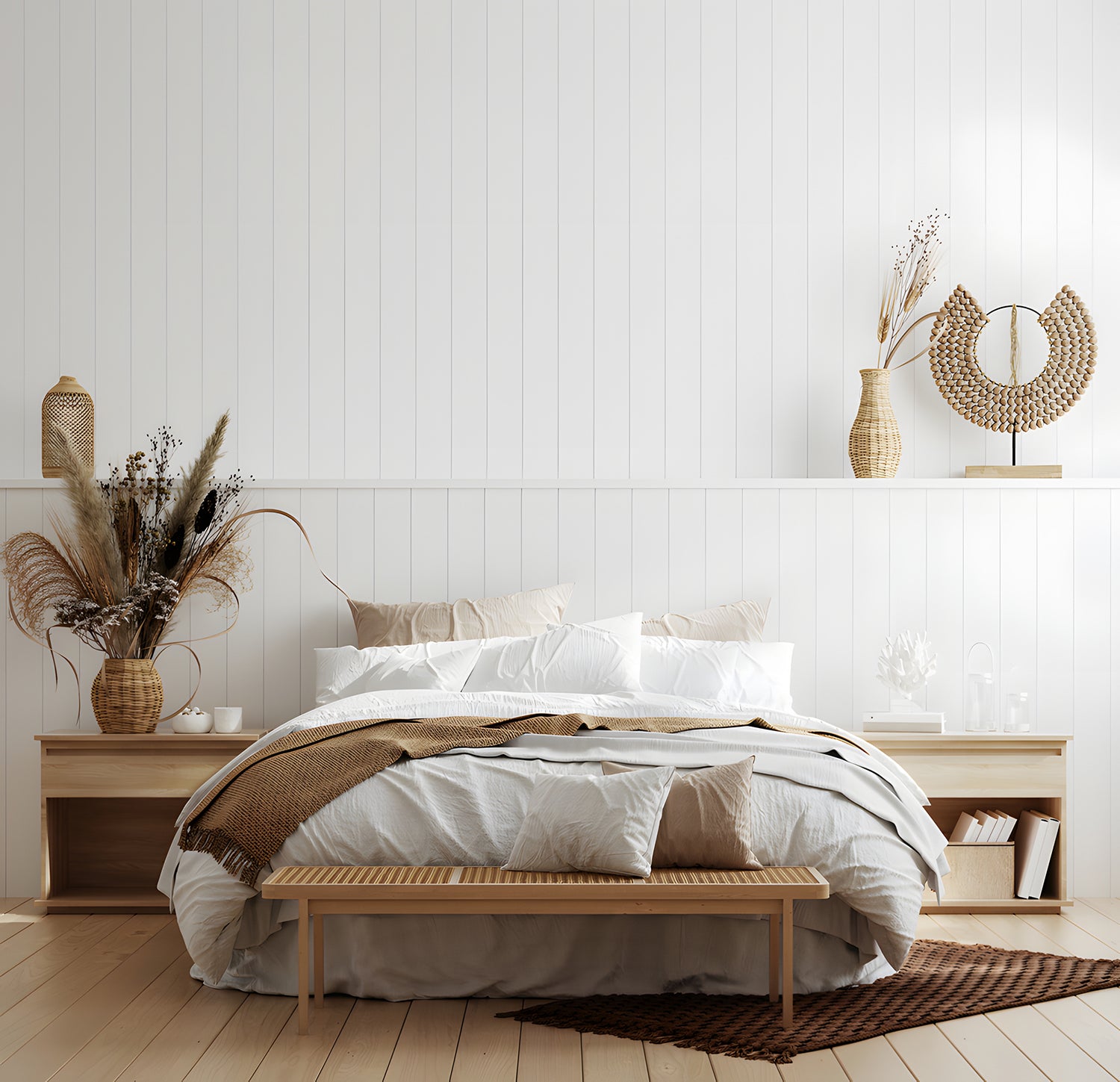
Featured: Shiplap, Vertical Wallpaper
For more on getting the width and spacing right, read our guide to vertical striped wallpaper.
Soft Neutral Pattern
A fine geometric or hand-drawn repeat in two close tones is the safest choice for a room whose purpose is still undecided. It gives the wall something to say without committing the room to a mood, and it works equally well behind a bed, a desk or a cot. Patterns at this scale also forgive a room that is not perfectly square, which matters more than you would think once you start hanging paper in a real flat. Keep the contrast low and the design will still look right in five years.
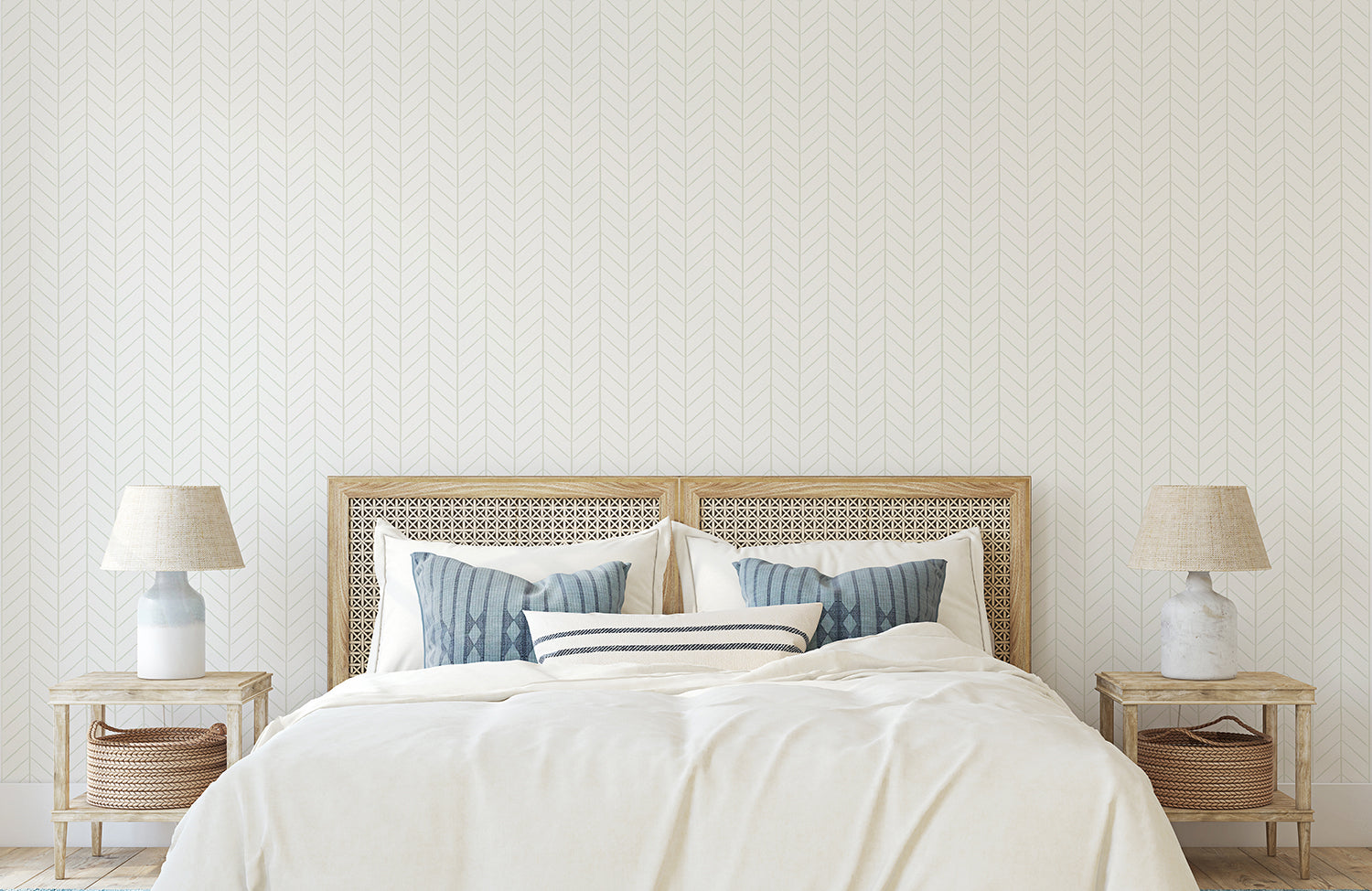
Featured: Herringbone Hand Drawn, Wallpaper
See the full range of repeating designs in our pattern wallpaper collection.
Gentle Ombre
An ombre gives a bedroom depth without a single motif on it, which makes it the most adaptable finish of the lot. The gradient reads as light rather than as decoration, so the room never looks like it was decorated for a particular purpose. It also solves a problem specific to a flat: the colour sits heaviest behind the bed and lifts as it rises, so you get depth without the ceiling appearing any lower than it already is. A gradient suits a guest room, a study and a nursery equally well, which is as close to future-proof as a wall finish gets.
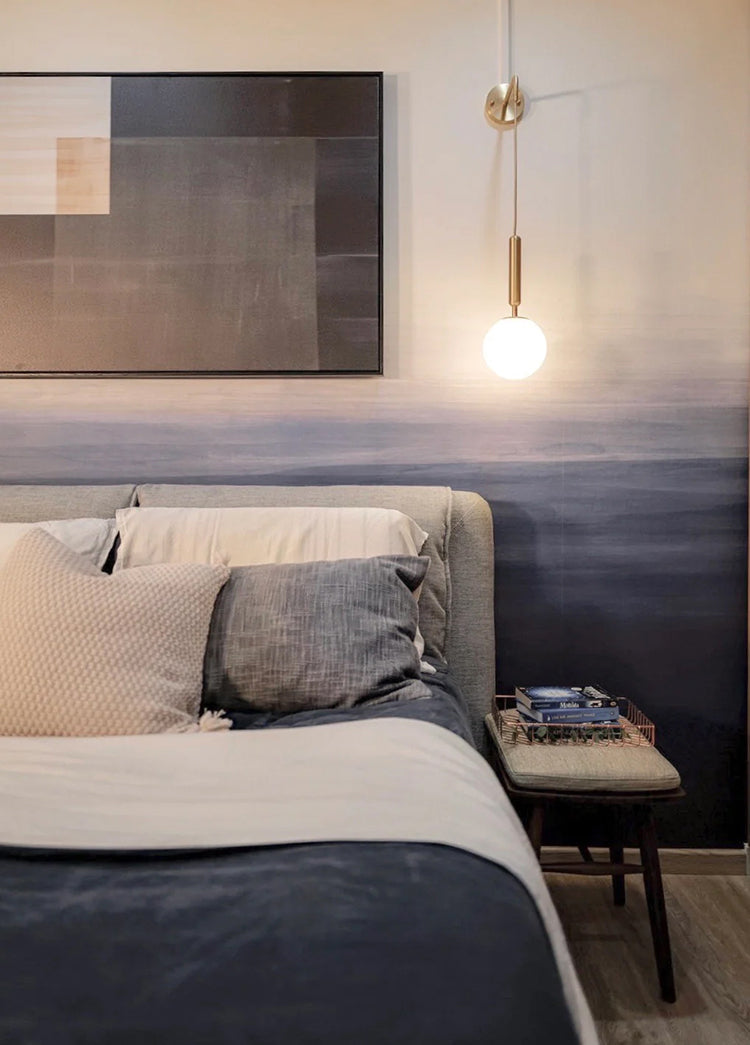
Featured: Gradient Ombre, Mural Wallpaper
For more ways to use a gradient at home, read our guide to ombre wallpaper ideas and tips.
Tropical
Tropical designs have an obvious logic in a Singapore flat, and the versions that work in a bedroom are the restrained ones. Leaves that hang from the top of the wall and fade out partway down are particularly well suited to a room you have not furnished yet, because all the detail sits above head height and the lower half stays open for whatever ends up there. Mixing solid greens with line-drawn outlines keeps the design from reading as heavy, which matters on the shorter walls a flat gives you. The effect is closer to a window onto something green than to a pattern.
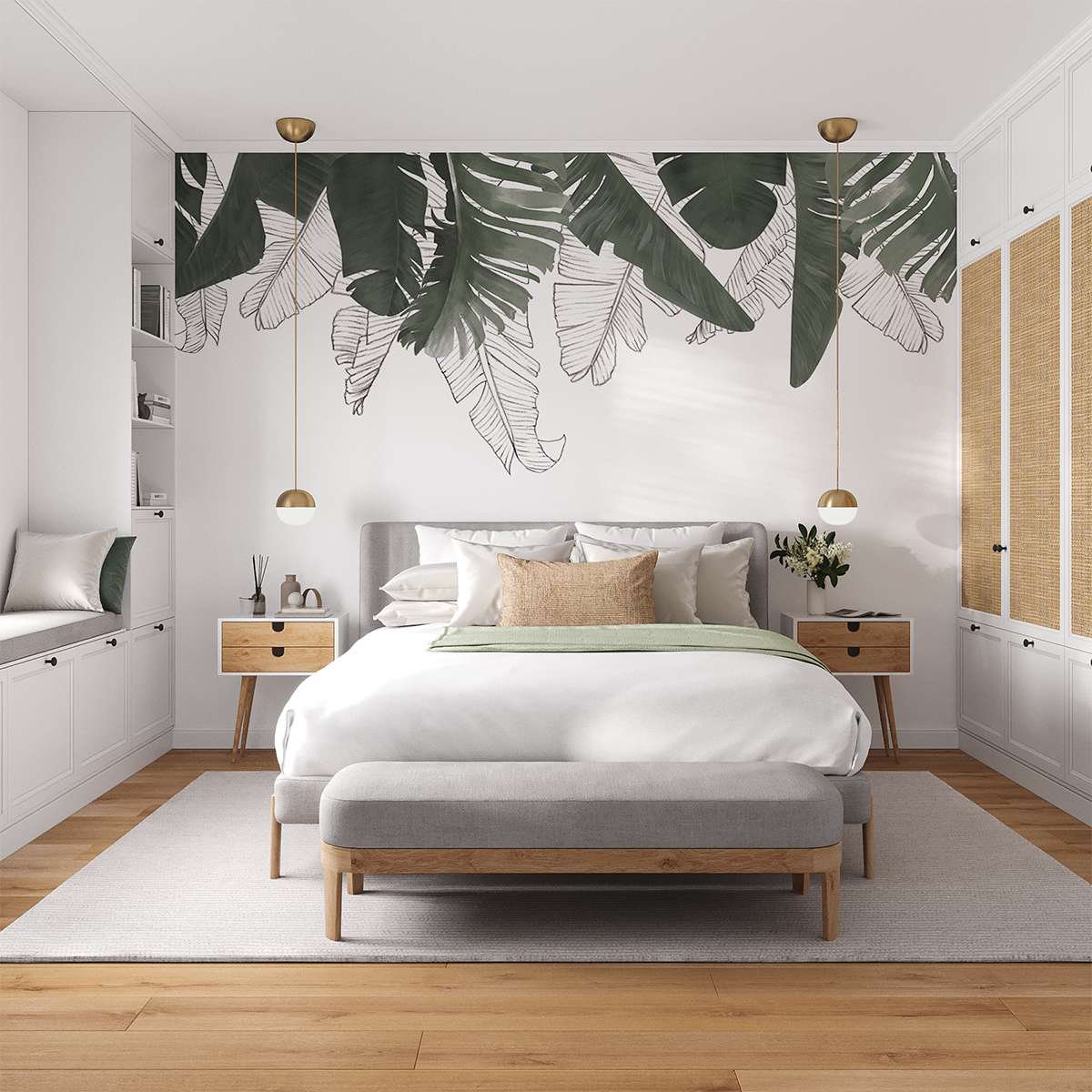
Featured: Banana Garden, Mural Wallpaper
Browse the full range of palms and fronds in our tropical wallpaper collection.
Geometric
Geometric designs are the most adaptable thing you can put in a room that will change hands. Shapes carry no age and no gender, so a pastel grid or a soft block pattern reads as cheerful in a child's room and as graphic in a study, which is exactly the flexibility a second bedroom needs. They also work with bunk beds and built-in storage better than a scenic design does, because there is no composition to be blocked by furniture. Keep the palette soft and the shapes loose, and the wall will stay interesting without becoming busy.
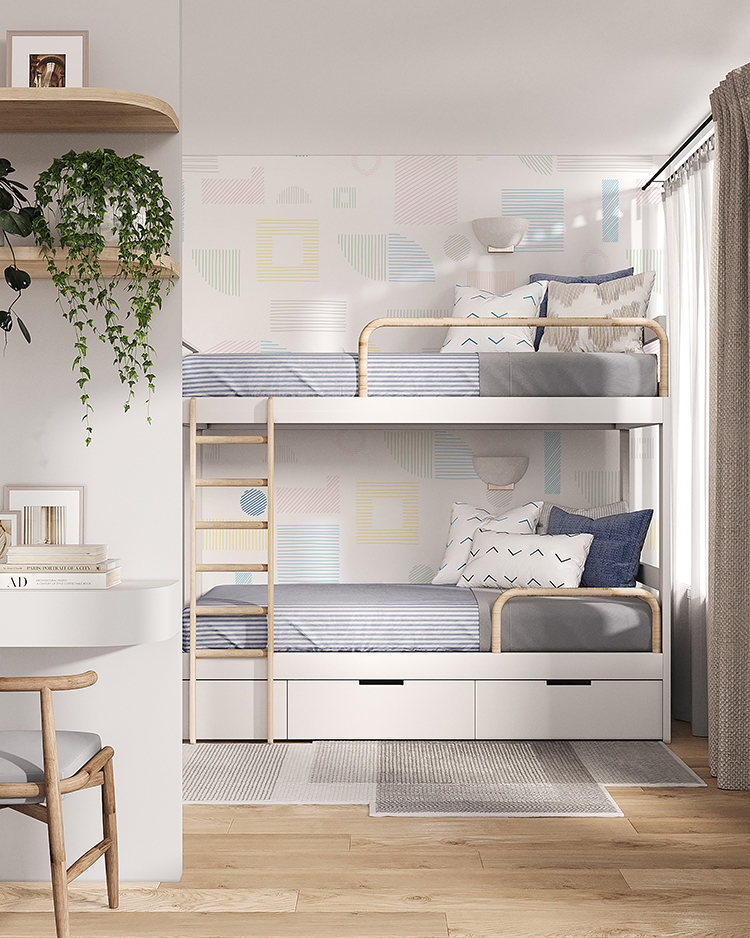
Featured: Soft Pastel Grids, Pattern Wallpaper
See the full range of shapes and blocks in our geometric wallpaper collection.
Mural Or Pattern For A BTO Bedroom?
This is the first format decision to make, and in a new flat it is less about taste than about how settled your plans are. A mural is one composition sized to one wall. A pattern repeats, so it can be cut anywhere and still make sense.
Choose A Mural When The Wall Is Decided
A mural is printed to the measurements of a particular wall, which makes it the stronger choice once the carpentry is drawn and you know exactly how much wall will still be visible. The reward is a room that looks designed rather than decorated, since the composition is placed deliberately against the bed rather than simply repeating behind it. The thing to be sure of first is the measurement. Order a mural before the wardrobe run is confirmed and a later change of 20cm can push the whole composition off centre.
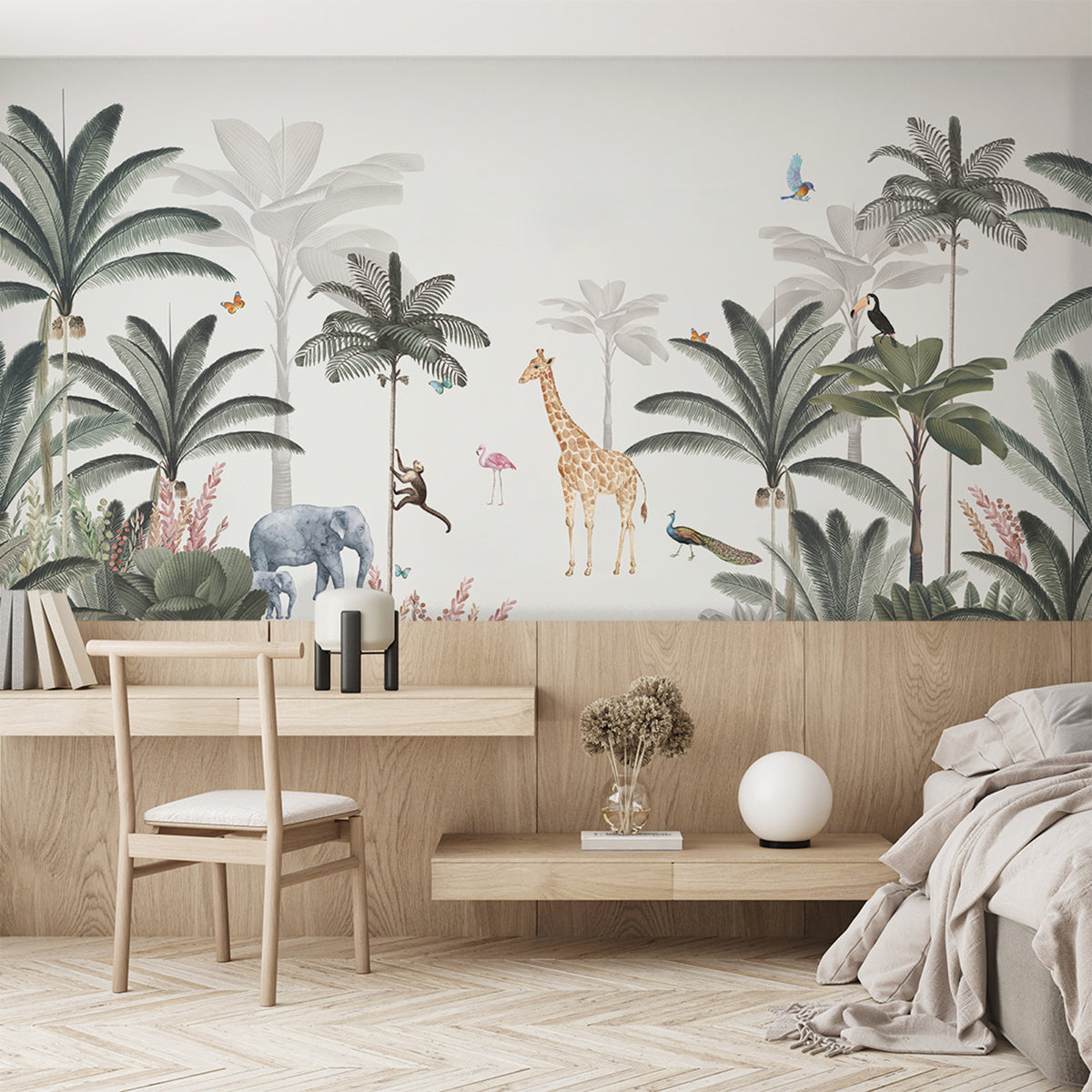
Featured: Lush Kingdom, Animal Mural Wallpaper
Browse the full range in our mural wallpaper collection.
Choose A Pattern When The Room Is Still Moving
A repeating pattern asks much less of you in advance. It can be hung on any wall, trimmed at a wardrobe edge or a doorway without losing its sense, and ordered before every last dimension is settled. For the second and third bedrooms in particular, where the use may change twice before the room is really finished, a pattern is the lower-risk answer. It also tends to suit a room you have not furnished yet, since there is no composition waiting to be framed by a bed that has not arrived.
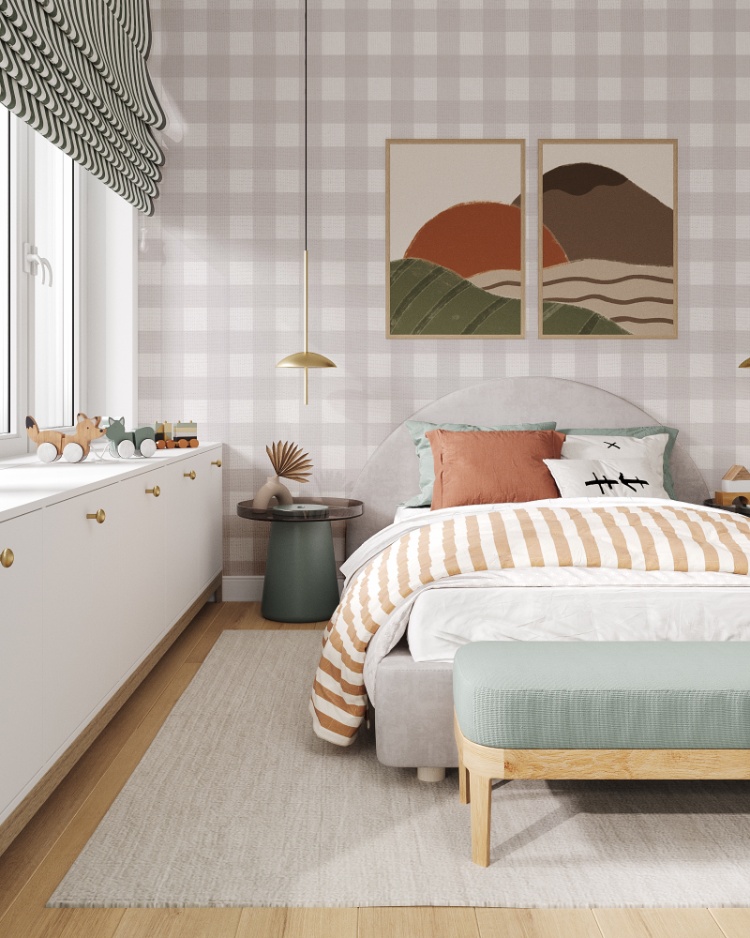
Featured: Gingham, Wallpaper
See the full range of repeating designs in our pattern wallpaper collection.
Popular Colourways For A BTO Bedroom
Colour is the decision that carries furthest in a new flat, because you are usually choosing for more than one bedroom at once and those rooms will not stay as they are. The second bedroom becomes a study, the study becomes a nursery, the nursery becomes a bedroom again. A colour chosen for what a room is today has to still make sense when the furniture in it has changed twice.
That is also the honest answer to the light or dark question. In a flat where the bedrooms are doing several jobs over the years, lighter grounds give you more room to move, since you can shift the whole mood with bedding, curtains and a lampshade rather than with a fresh roll of paper. Deeper colours are worth it where you know what the room is for and intend to keep it that way. The seven below all take a change of use without complaint.
Soft White And Oat
The most flexible ground there is, and the one worth considering if you are papering several bedrooms and want them to feel related. A woven or textured white gives you something more interesting than paint while asking nothing of the furniture, so the same wall carries a guest bed, a desk or a cot without looking like it was chosen for any of them. It is also the easiest base to layer on, since every other colour in the room becomes a choice you can reverse.
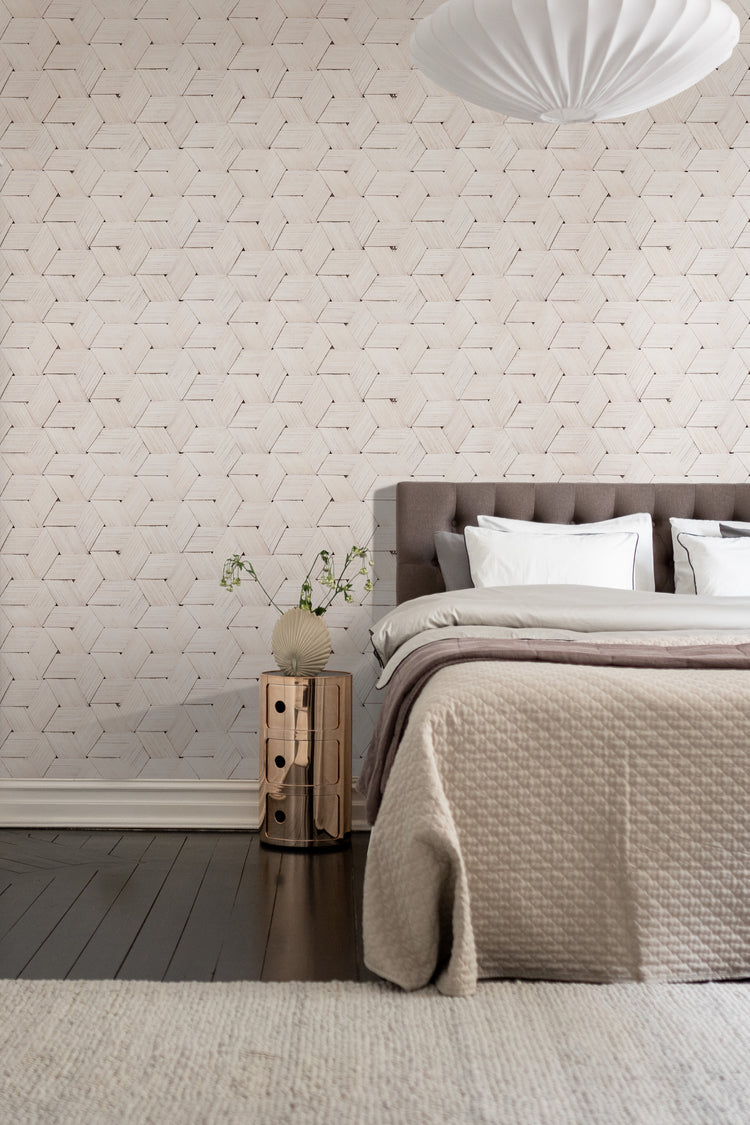
Featured: Birch Bark Braids, Pattern Wallpaper
Sand
Sand sits a step warmer than white and holds its character better under the warm bulbs most people fit in a bedroom. It is a forgiving backdrop for timber, rattan and the light laminates that built-in wardrobes tend to come in, which means the room still works after the carpentry arrives rather than in spite of it. Sand also handles a change of use particularly well, since it reads as calm in a bedroom and as warm in a study without any adjustment.
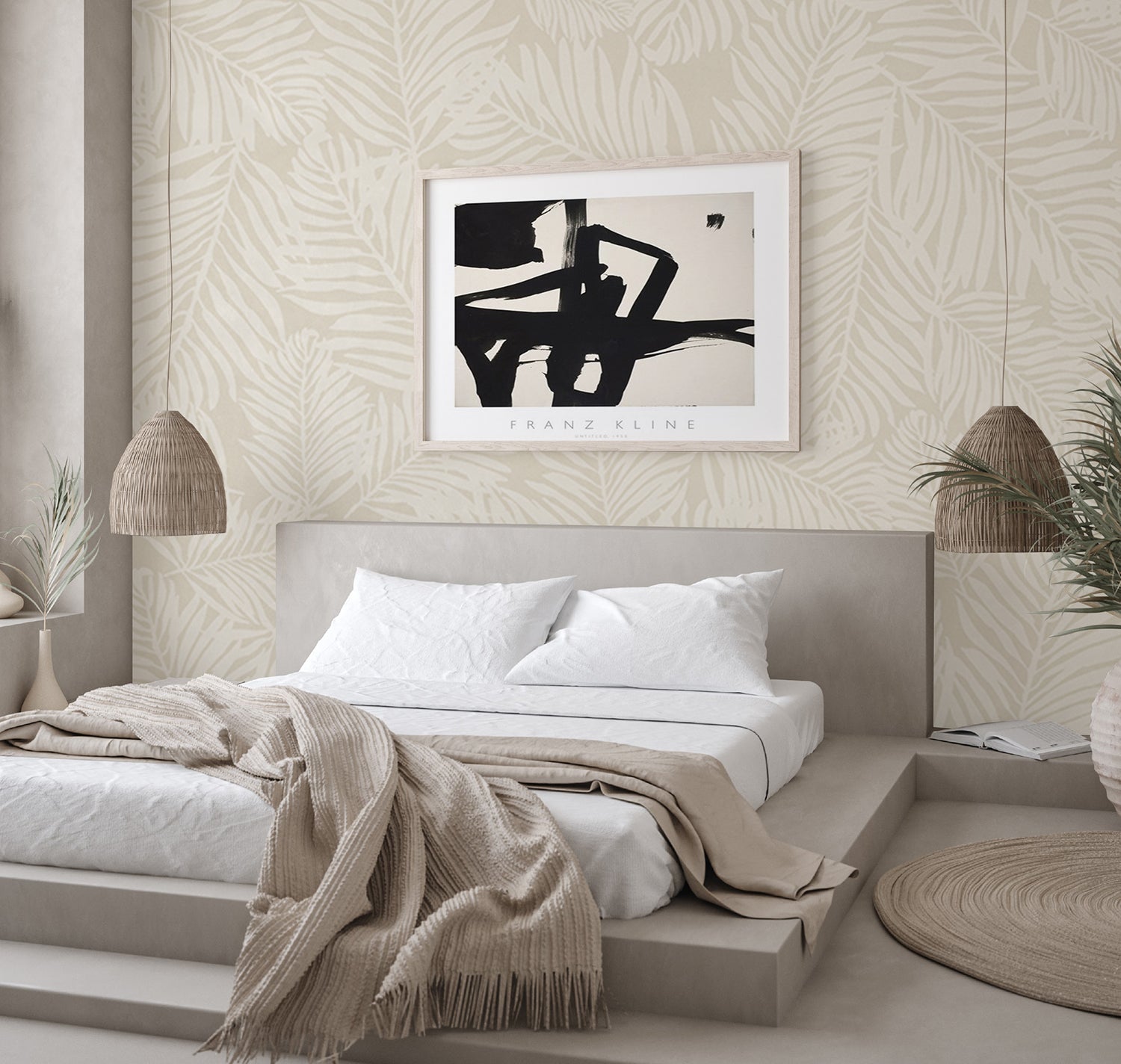
Featured: Heather Fern, Pattern Wallpaper
Warm Gold And Cream
A fine metallic line on a cream ground is the quietest way to get warmth into a room that does not get much sun. Gold catches whatever light reaches the wall and gives it back, so the room lifts at the times of day when a flat colour would go dull. Because the pattern is drawn rather than printed as a block, it stays light enough to live with across years and uses, and it suits a room that might hold a dressing table as readily as a desk.
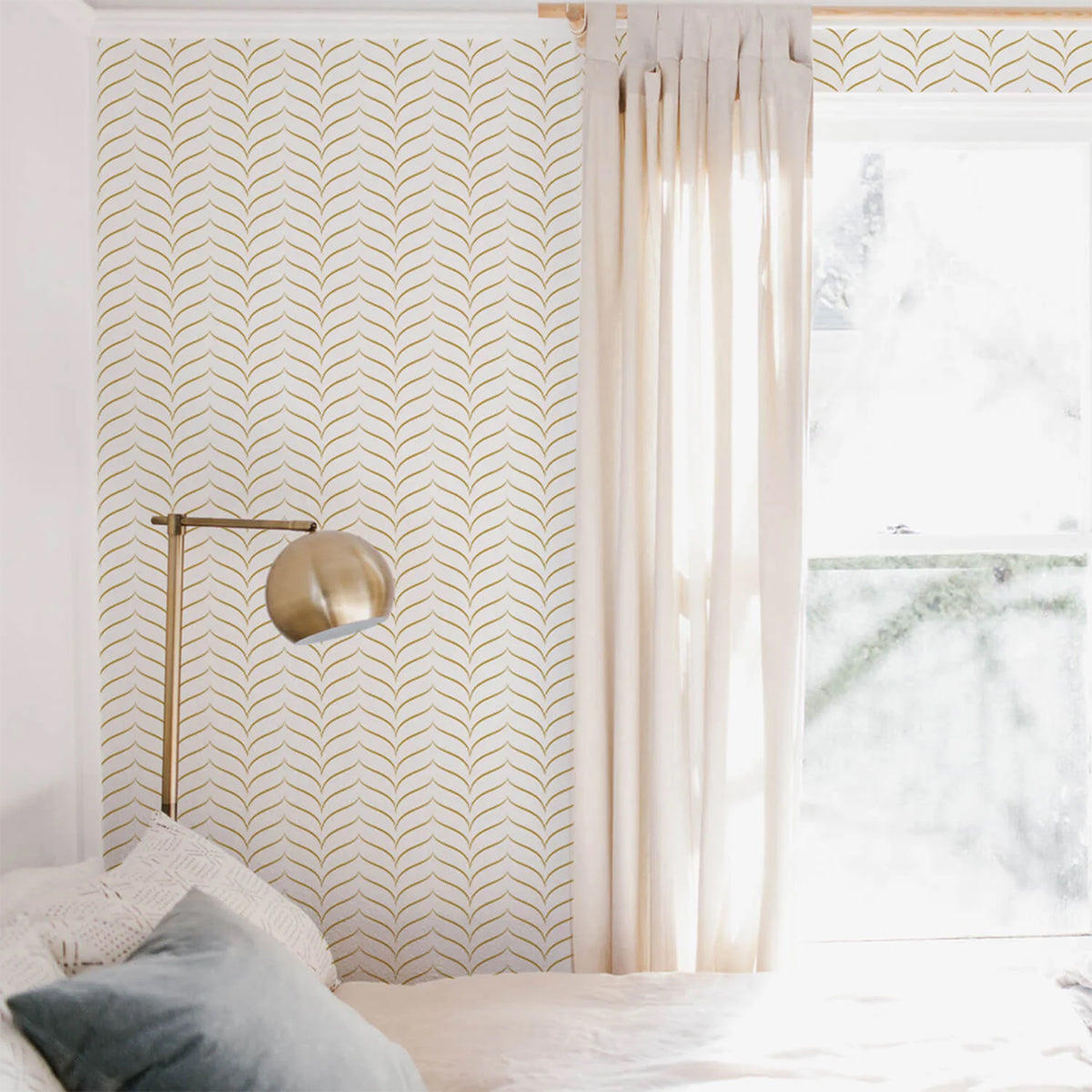
Featured: Chevron, Pattern Wallpaper
Blush And Apricot
Blush gets written off as a nursery colour, which undersells it. Taken warm, towards apricot and clay rather than towards pink, it behaves like a neutral with the temperature turned up, and it looks best in the evening under lamplight, which is when most bedrooms are actually seen. It flatters cane, rattan and pale timber, and it is one of the few warm colours that works just as well behind a bed as behind a desk.
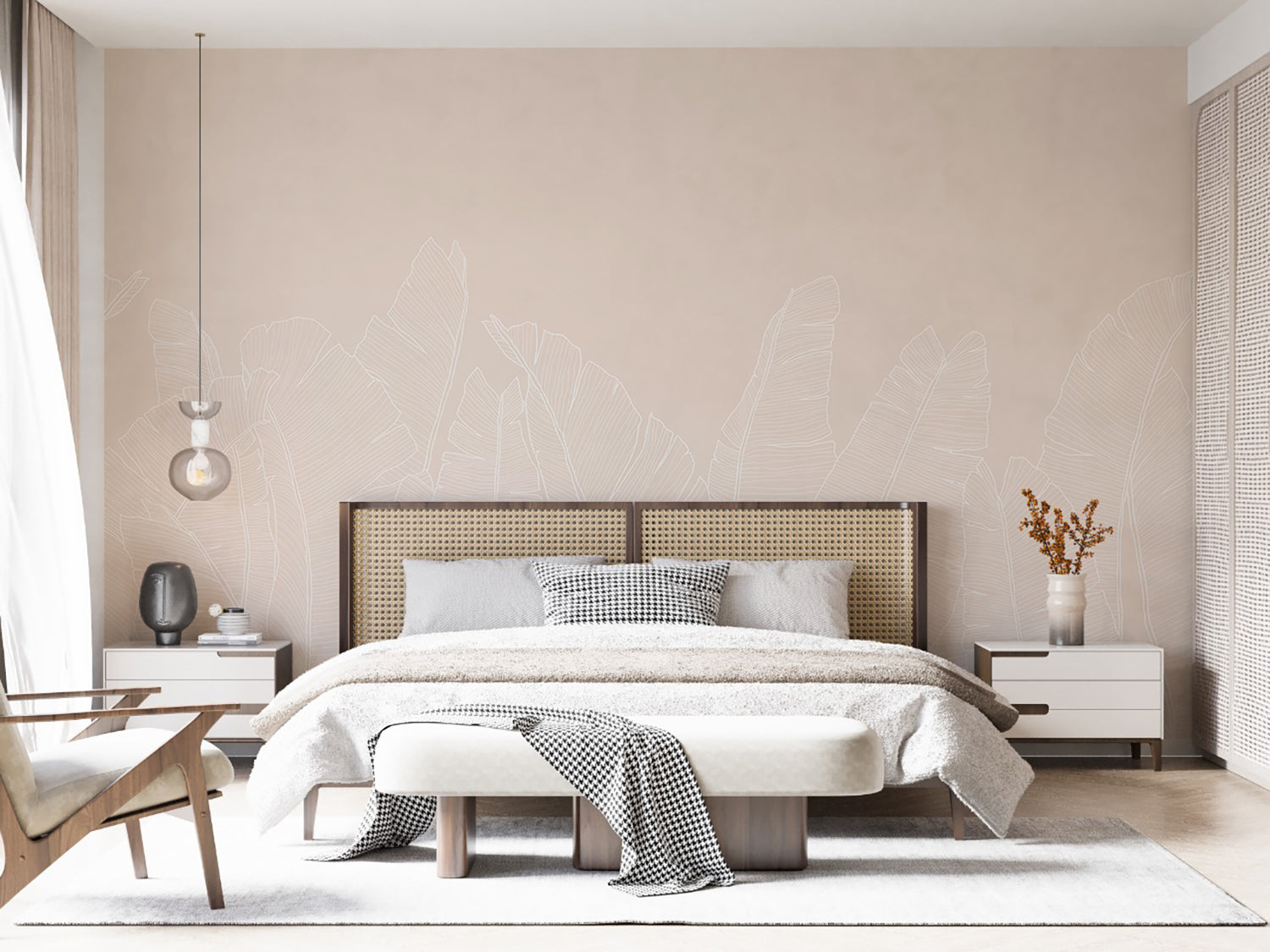
Featured: Banana Foliage, Wallpaper
Sage Green
Sage is the most adaptable colour on this list. It is soft enough to disappear when you want the furniture to lead and present enough to carry a wall on its own, and it belongs to no particular function, which is exactly what a room that keeps changing hands needs. Used as a whisper on an off-white ground it reads almost as a texture, while a stronger sage turns the same wall into the feature of the room. Either version sits comfortably with timber and with white storage.
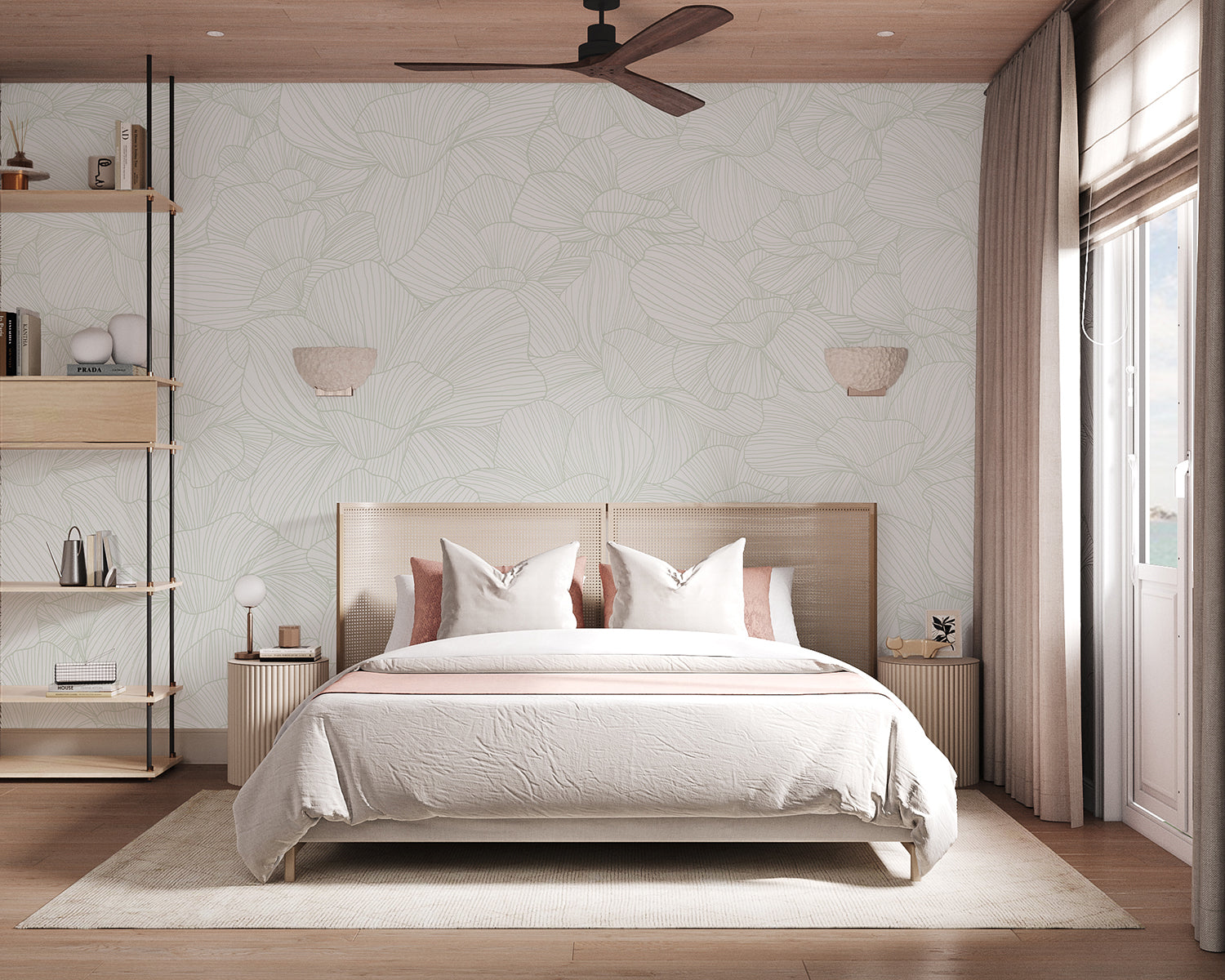
Featured: Saltwater Blooms, Pattern Wallpaper
Soft Blue And Denim
Blue is the colour people reach for in a bedroom and then worry will feel cold. The answer is to keep the wall at the soft, dusty end and let the stronger denim tones arrive through bedding and cushions, which are the parts of a room you can change in an afternoon. That split is what makes blue so useful in a flat where rooms shift purpose: the wall stays quiet and does not date, while the textiles carry whatever the room happens to be at the time.
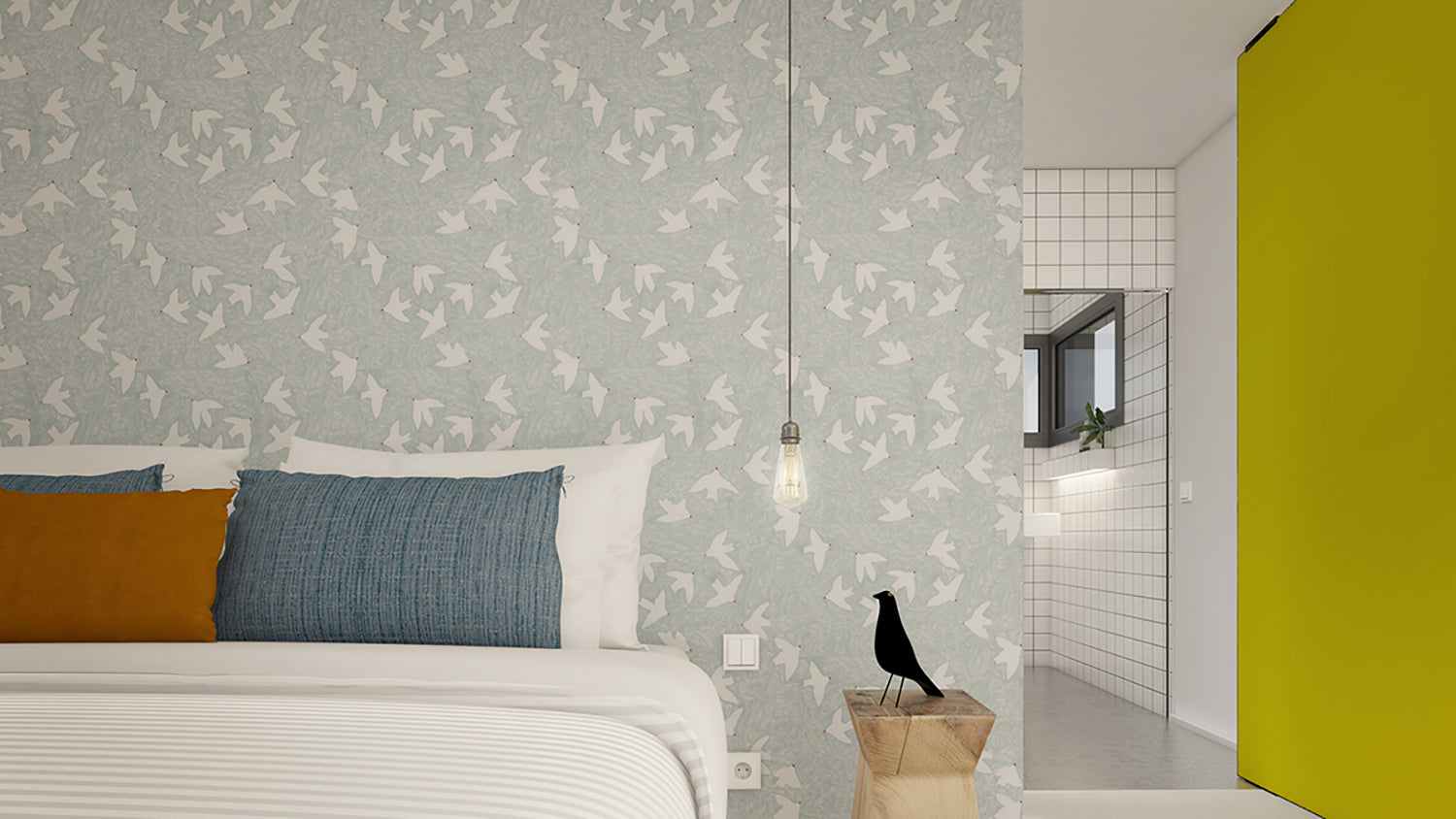
Featured: Flight Swallow, Wallpaper
Mineral Grey And Greige
Grey earns its place as the backdrop that lets everything else decide the room. The versions worth having lean warm, towards greige, since a cool grey can turn flat under the warm bulbs a bedroom usually gets. Given some texture in the design, grey stops being the safe option and becomes the quiet one, which is a different thing. It is the colourway to choose for a room you genuinely cannot predict, because it will take a cot, a desk, a guest bed or a wall of shelving without looking wrong behind any of them.
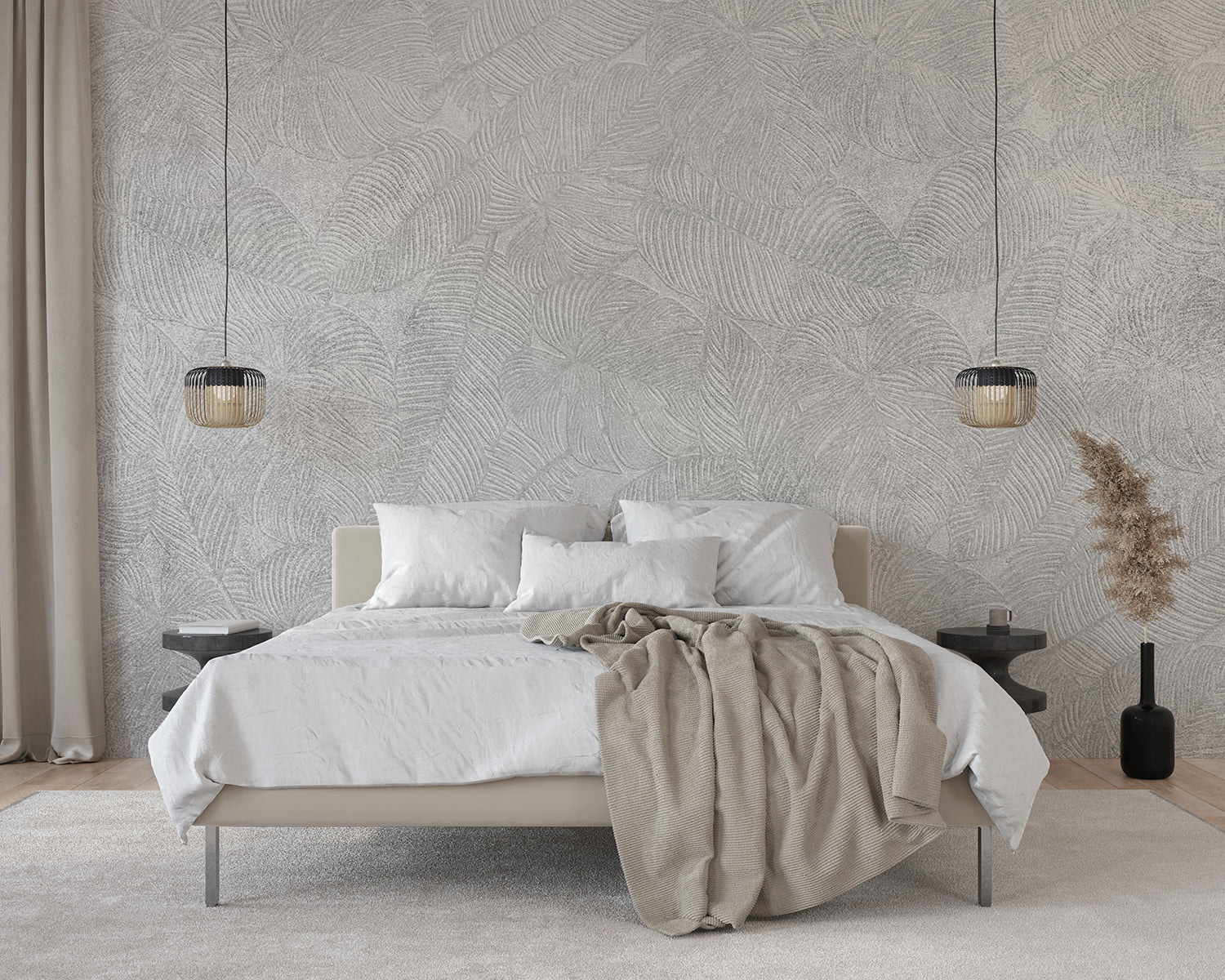
Featured: Erin Stone Foliage, Faux Texture Wallpaper
Practical Tips For A BTO Bedroom
Wallpaper is one decision among several, and the others are easier to get right now than at any point afterwards. These are the ones worth settling before the contractor starts.
- Mark your socket and switch positions before the electrician comes. Bedside sockets at skirting level mean reaching behind a bedside table for the rest of the flat's life. Raising them to about the height of a bedside table, and adding one on each side rather than one in total, costs very little while the walls are open.
- Settle the bed size before the wardrobe depth is fixed. A built-in wardrobe is usually around 60cm deep, and that depth comes straight out of the walking space beside the bed. Deciding queen or king after the carpentry is drawn is how people end up turning sideways to get into bed.
- Ask where the air-con fan coil and its trunking will run. It usually sits high on a wall, often the same wall as the bed, and it is far easier to plan a wall around it than to discover it afterwards.
- Decide what the bay window is for. A seat, a run of low storage, a desk or a dressing table are all reasonable, and each needs a different answer from your carpenter. Leaving it undecided generally means it becomes a shelf for things with nowhere else to go.
- Specify warm bulbs in the bedrooms. Around 2700K to 3000K suits a room for sleeping, while the same cool white you might choose for the kitchen makes a bedroom feel clinical. Lighting is usually a single order, so the distinction has to be made upfront.
- Plan the curtains early. Blackout matters more than people expect on a low floor, facing a lit corridor or a carpark. Decide between a track and a rod before the carpenter finishes, since a track usually wants a recess or a pelmet built in.
- Think about where the door swings. A bedroom door opening into the room eats about the same floor area as a bedside table. Where the layout allows it, a door that swings against a wall rather than into the walking space buys you real space for nothing.
- Leave one room unfinished on purpose. The second or third bedroom does not have to be resolved in the first month. Living in the flat for a season tells you more about how you use it than any amount of planning beforehand.
Getting The Order Of Work Right
Most of the avoidable problems in a new flat come from doing things in the wrong sequence. A workable order for the bedrooms:
- Measure after the carpenter, not before. Built-in wardrobes are made to the room, so the wall you will actually paper is only known once the carpentry is drawn. Measure then, and measure the visible wall rather than the full one.
- Order samples early. Bedroom light in a new block can be very different from what you expected, particularly on a low floor or facing another block. Seeing a sample against the real wall costs you a few days and saves the whole decision.
- Paper before the built-ins go in. Where the paper and the carpentry meet, hanging first gives a cleaner edge and removes the need to cut around a finished unit.
- Do the rooms you will not use first. The second and third bedrooms are the easiest to work in and the lowest risk, which makes them the right place to start if you are hanging paper yourself for the first time.
Common Questions
Can you wallpaper a BTO flat before moving in?
Yes, and it is the easiest time to do it. The walls are bare and accessible, nothing needs protecting, and there is no furniture to work around. Coordinate it with your carpenter's schedule so the paper goes up before the built-ins are installed. If you would rather not hang it yourself, we offer installation as an optional service in Singapore, which you can add at checkout.
How many bedrooms does a BTO flat have?
A 3-room flat has two bedrooms and a 4-room or 5-room flat has three. The main bedroom is the largest, and in a 4-room or above it usually has the attached bathroom.
Should every bedroom use the same wallpaper?
No. The rooms get used differently and change at different rates. Keeping a shared palette across them while varying the design gives the flat coherence without making the bedrooms interchangeable.
What wallpaper suits a room that will become a nursery?
Something that is not tied to a theme or an age. A soft ombre, a gentle check, a pastel geometric or a watercolour scene will carry a cot now and a desk later without needing to be changed.
When should wallpaper go up in a BTO renovation?
After painting and before the carpentry is installed. That order gives you clean walls to work on and a neat edge where the paper meets the built-ins.
Planning The Bedrooms In Your New Flat
The real advantage of a new flat is timing. You get one window in which every bedroom wall is empty, reachable and unfinished, and the decisions you make in that window are both the cheapest and the easiest you will ever make in this home.
Start with the room you will sleep in, which has the most constraints and is covered in our HDB master bedroom guide. Then work through the others, choosing designs loose enough to survive a change of use. If you are papering elsewhere in the flat, our guide to wallpaper for Singapore homes covers the rest of the rooms, and for the placement decision on a single wall, see our guide to bedroom feature wall ideas.
Browse the full range of bedroom wallpaper designs and order a sample so you can see it against the light in your own flat before you commit.
Transform Your Home with Made-to-Measure Wallpaper
Explore our full collection of wallpaper designs and get inspired to find the perfect design for your home. Installation services are available in selected countries, so just add it at checkout if it’s offered in your area.
At Hello Circus, we believe every wall deserves something special. That’s why all our wallpapers are custom-made to fit your wall’s exact dimensions, with no generic rolls and a perfect fit every time. Priced by the square metre (Height × Width × Unit Price), you only pay for what you need.
Choose the Right Wallpaper Material
Whether you’re decorating your forever home, updating a rental property, or refreshing a single feature wall, choosing the right wallpaper material can make all the difference. At Hello Circus, every wallpaper design is available in three premium materials, so you can select the option that best suits your space, installation preferences, and lifestyle.
- Non-Woven Matte Wallpaper: Our most popular choice, featuring a smooth, non-reflective finish that creates a beautifully soft look. Durable, breathable, and easy to install using the paste-the-wall method, it’s ideal for most residential interiors.
- Heavy Duty Textured Vinyl Wallpaper: Designed for busy households and commercial spaces, this premium textured finish offers added durability and a luxurious tactile feel. It’s perfect for high-traffic areas where extra resilience is required.
- Peel and Stick Wallpaper: A self-adhesive option that makes decorating quick and convenient. Ideal for renters, DIY enthusiasts, or anyone who prefers a paste-free installation, peel and stick wallpaper allows you to refresh your walls with minimal fuss while enjoying the same beautiful Hello Circus designs.
Whichever material you choose, every wallpaper is custom-made to your wall’s exact dimensions using high-quality printing and vibrant, colour-rich inks, ensuring a beautiful finish that’s made to last.
Curious About the Cost? Try Our Wallpaper Visualiser
- Enter your wall’s width and height for an instant price.
- Preview how your chosen wallpaper will look on your wall, which is especially helpful for murals, where placement matters.
Still deciding? Order a sample to feel the texture, quality, and finish before you commit.
How to Calculate How Much Wallpaper You Need?
Before purchasing, it’s important to measure your wall accurately to avoid over- or under-ordering. Here’s a simple way to get started:
- Measure the width of the wall from edge to edge.
- Measure the height from floor to ceiling.
- Allow for extra, around 10cm, to account for trimming and pattern matching.
Need help? Read our guide on how to measure your wall for wallpaper or get in touch with us.



